The House
A jacket built like a good building.
The house was founded in Turin in 2026, after a conversation about a jacket.
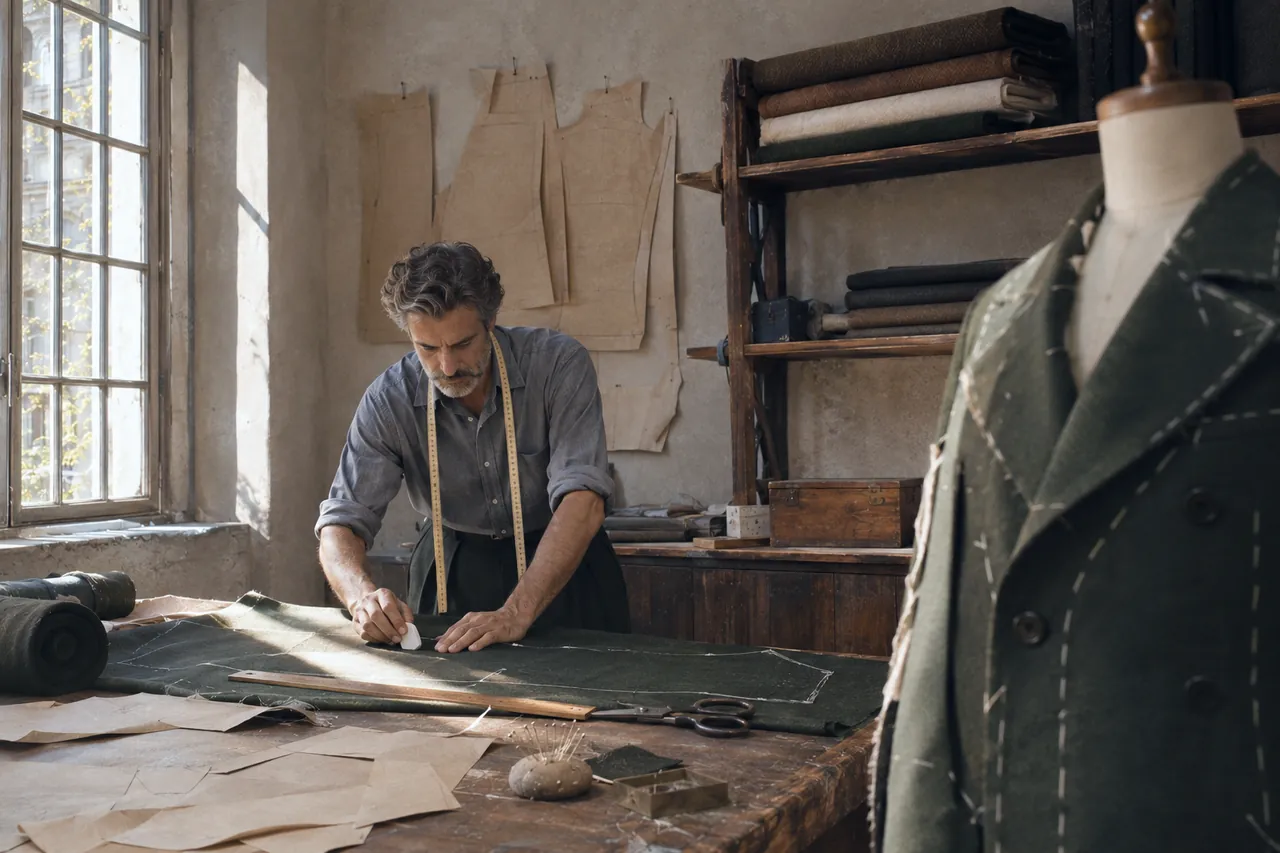
Nico Ardenghi had trained as a pattern cutter in soft Neapolitan tailoring and was tired of making suits that looked magnificent on a hanger and rigid on a person. The architect across the table had spent a decade restoring stone buildings and kept noticing the same thing: the most beautiful structures were the ones that had softened with use. Steps worn into a curve. A column's edge rounded by a century of shoulders.
The two of them asked a simple question. What if a jacket were built like a good building, solid in the right places and forgiving everywhere else? The answer became a method. Every piece starts as a drawing of a line: the line of a shoulder, the fall of a lapel, the break of a trouser. The line is then given only as much structure as it needs. Everything else is left to the cloth and the body.
Chapter one
The cut.
- The Eased Shoulder
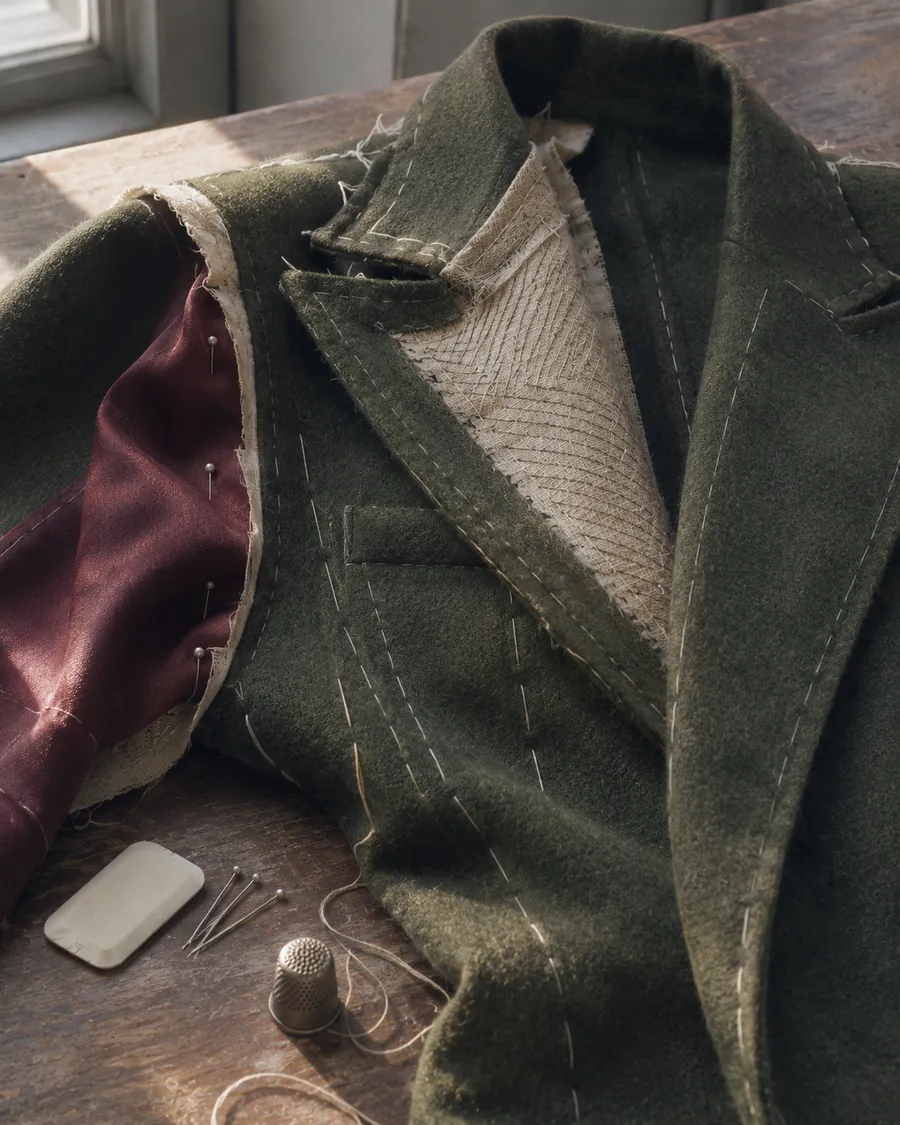
- A natural shoulder line, a 5 mm pad and a softly rolled sleeve head. Structure you see, not feel.
- The Ardenghi Curve
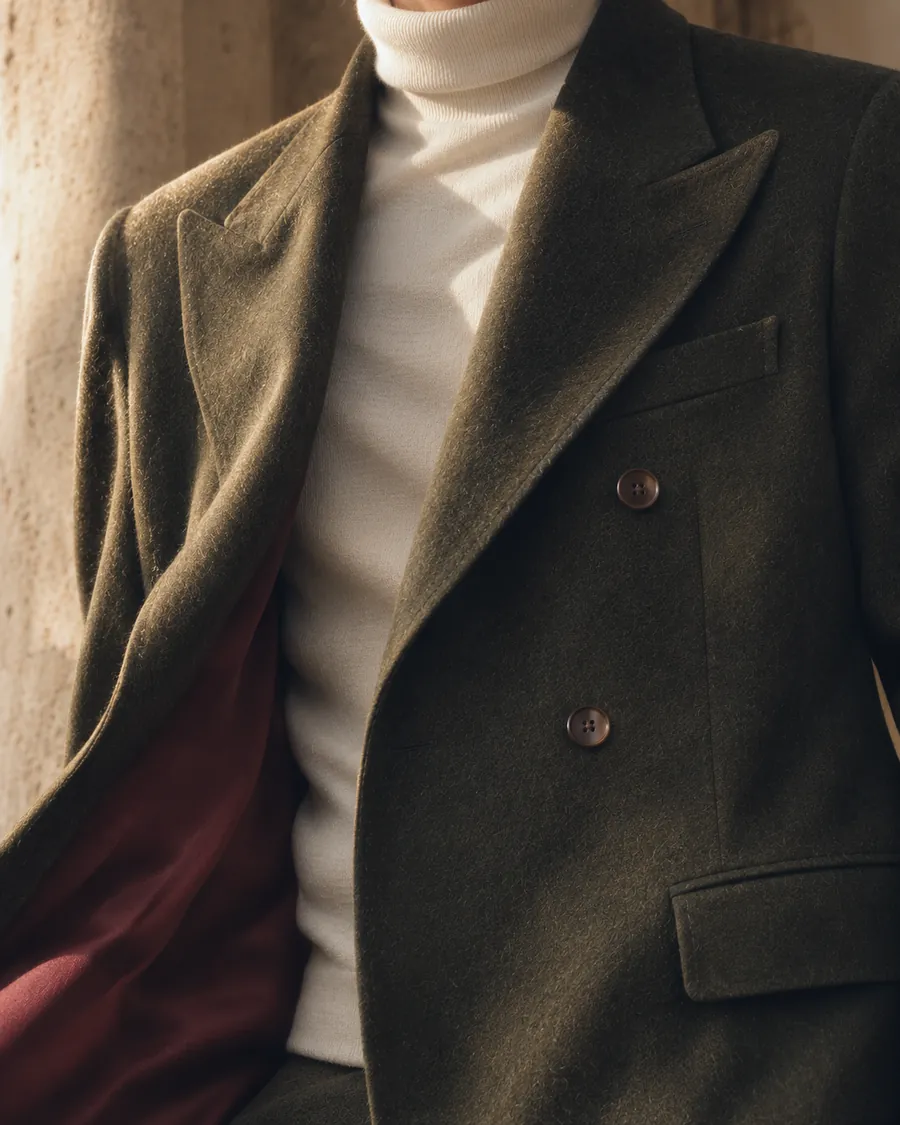
- Jacket fronts cut away below the last button in a generous curve, 12 cm in radius on the Arc. The jacket opens as you walk.
- The unpressed lapel
- Lapels roll to the button instead of being pressed flat, so they catch the light.
- The Ease Pleat
- A concealed 5 cm pleat at the centre back, from yoke to waist, for reaching, cycling and carrying.
- The Granata lining
- Sleeves and back yoke lined in garnet cupro, the body left unlined to breathe. The colour shows only in movement.
- Half canvas
- Wool and horsehair canvas through the chest and lapel, so the chest holds its shape and moulds to the wearer.
Chapter two
The cloth.
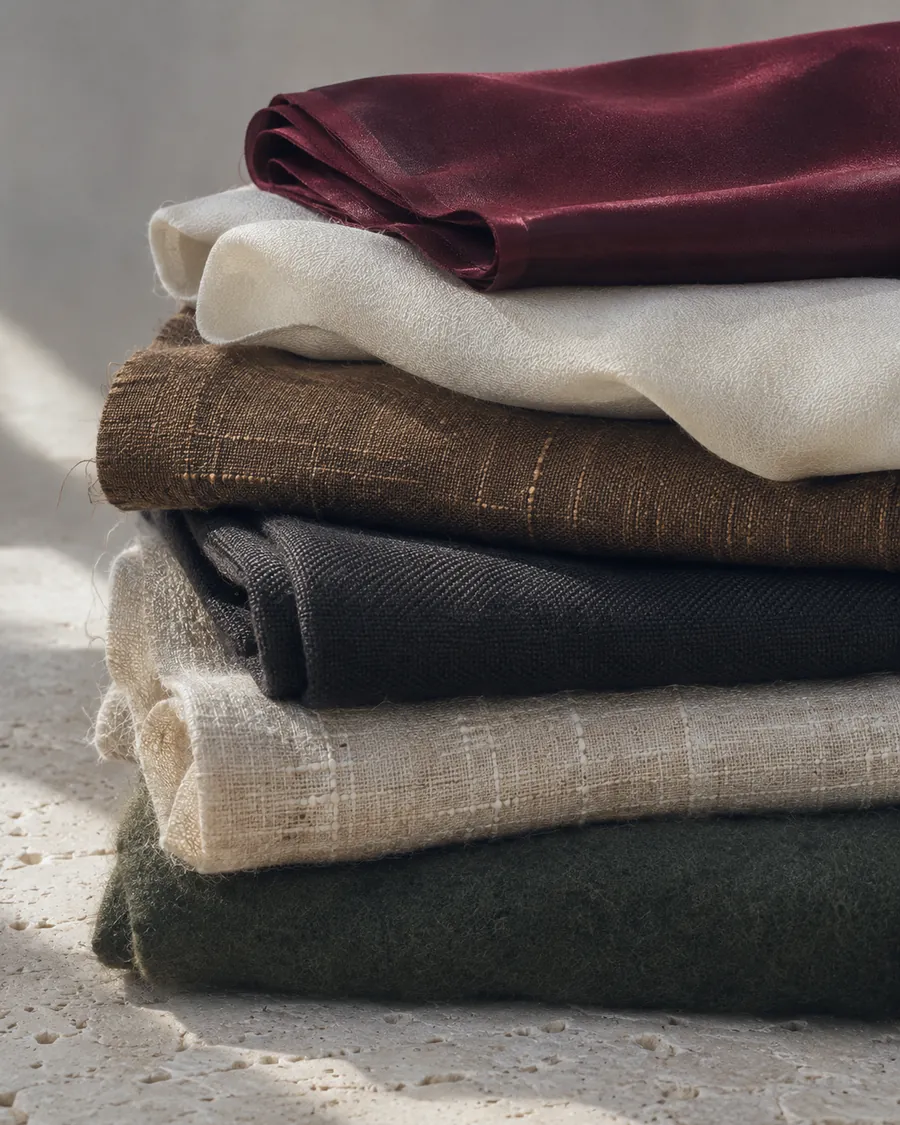
Five cloths from mills in Piedmont and northern Italy, an hour's drive from the studio. Each is chosen for one fit.
| Cloth | Composition | Weight | Hand | Used in |
|---|---|---|---|---|
| Dry wool crêpe | 100% virgin wool | 280 g/m² | Matte, grainy, springy | Column |
| Wool flannel | 100% virgin wool | 340 g/m² | Soft, slightly brushed, warm | Arc |
| Wool-linen | 55% wool, 45% linen | 300 g/m² | Dry hand, irregular slub | Span |
| Brushed wool-cashmere | 90% wool, 10% cashmere | 520 g/m² | Deep nap, quiet sheen | Portico Coat |
| Double-face wool | 100% wool | 620 g/m² | Dense, unlined, clean raw edges | Exedra Wrap Coat |
Chapter three
The ease.
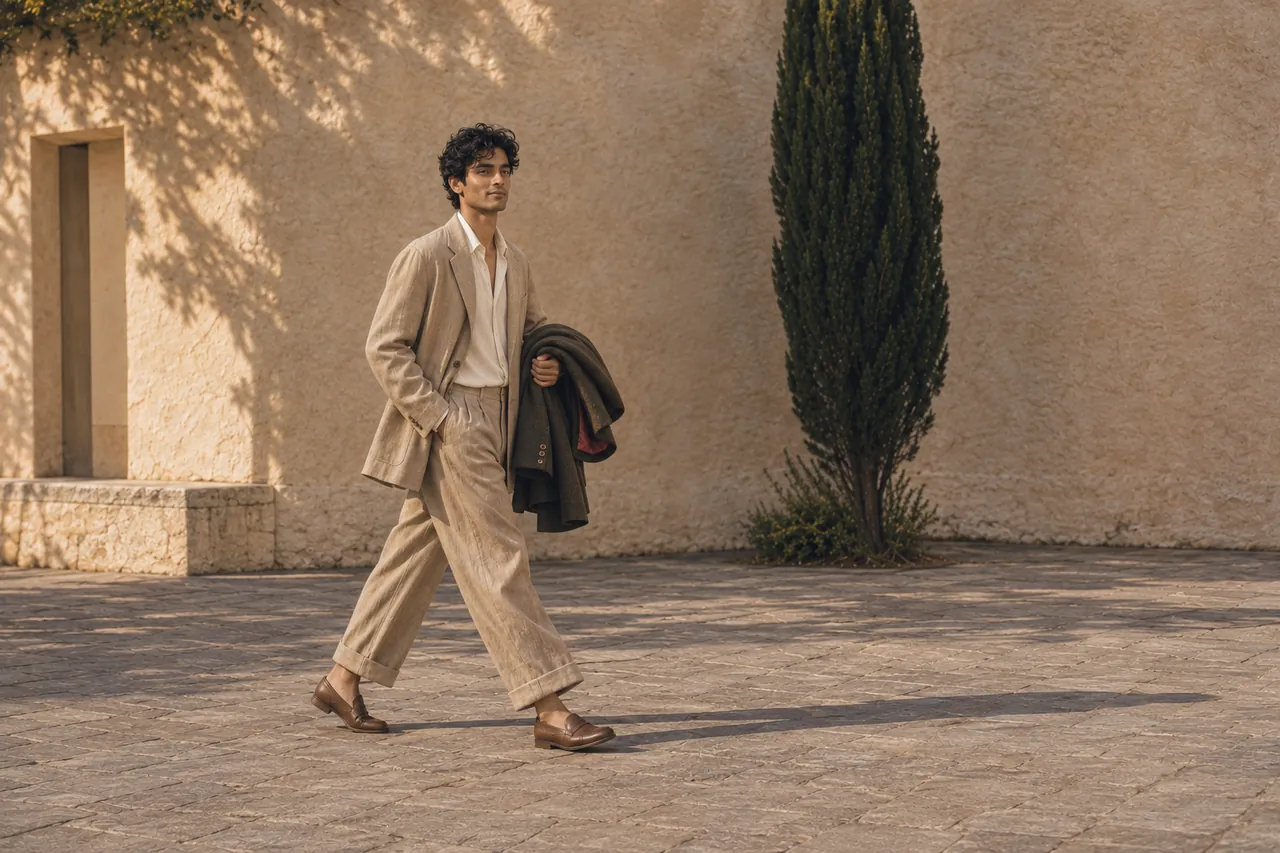
Reach for a shelf, swing onto a bicycle, carry a bag across a courtyard. Every jacket is tested on those three movements before it leaves the fitting room, with the Ease Pleat opening across the back and the curved front swinging clear.
See it move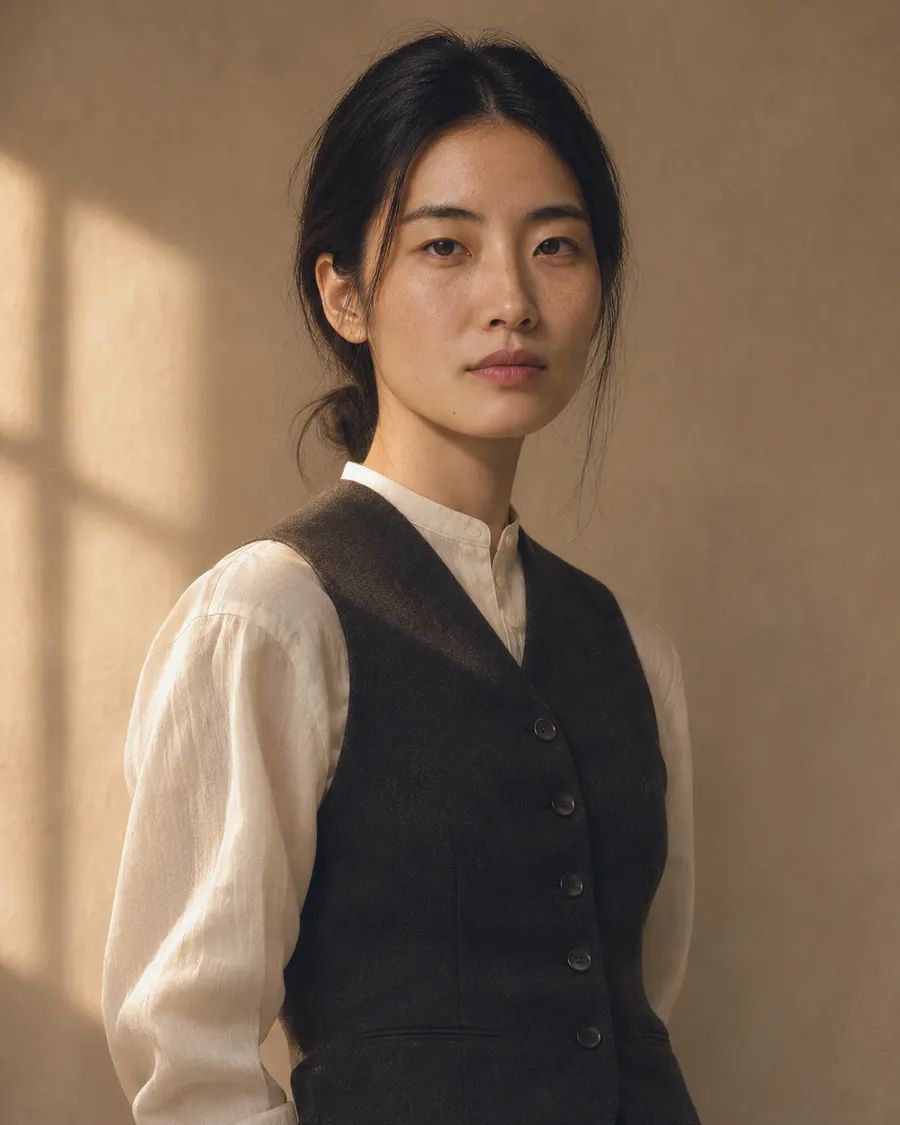
Chapter four
Cut for everyone.
Nico is short for Nicola or Nicoletta, so in Italy the name can belong to a man or a woman. The house never says which.
The same is true of the clothes. Every piece is cut for women and men from shared blocks, in three fits you choose by shape: Column, Arc or Span.
Explore the Fit System